
Data is the new oil – an analogy
We live in the Information Age in which ‘data is the new oil’ for both business and science. Oil is of little value without the means of refining it and machinery for it to power, similarly the value of data is reliant on quality control and the analytical approaches that can be applied to it to generate useful information and knowledge. Oil has been used by humans since ancient times, and humans have been recording data for a similar length of time, but it is only relatively recently that they became ubiquitous. Both oil and data are everywhere in our lives and impact them in both positive and negative ways. Impacts that are often unappreciated as oil and data both everywhere and nowhere at the same time, hidden from view within pipes and machinery, or the ethereal ‘digital realm’.

The positive impacts of oil and coal on overall prosperity and quality of life are immediate, whereas the negative aspects of climate change, acid rain, and the secondary environmental impact arising from industrialization usually came later as externalities rather than business and user costs. The benefits and costs that we and the planet will incur from the Information Age are unfolding before our eyes and will continue to do so for the foreseeable future. Some will be personal, immediate, and transparent, but much of costs to people and planet may be ‘hidden’, often in ‘plain sight’ and change across much shorter time scales. For more a sustainable world we must adapt structurally and individually to reduce fossil fuel consumption. Similarly to prosper to the information age we must adapt by improving our data literacy skills, and canvasing for obligatory open structured data publication by business as well as within academia. The workings need to be exposed to reveal the hidden externalities.
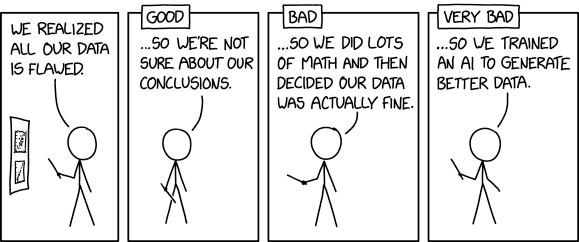
Data literacy and graphic presentation
“Data literacy is the ability to ask and answer real-world questions from large and small data sets through an inquiry process, with consideration of ethical use of data. It is based on core practical and creative skills, with the ability to extend knowledge of specialist data handling skills according to goals. These include the abilities to select, clean, analyse, visualise, critique and interpret data, as well as to communicate stories from data and to use data as part of a design process” (Wolff et al. 2016).
Wolff et al.’s definition lays out the components that together define data literacy, but it is hardly succinct or catchy. Data literacy is rarely explicitly taught with knowledge and skills often expected of students and employees without having any formal training. My approach to teaching data literacy is in tune with Wolff et al.’s list of competencies, but emphaises visualisation as seeing data is crucial to thinking about data, which is essential for understanding data and world. Data must be visualised approriately to be properly ‘seen’ which requires knowledge and critical evaluation of design options and principles, technological and graphic skills, and the real world system.
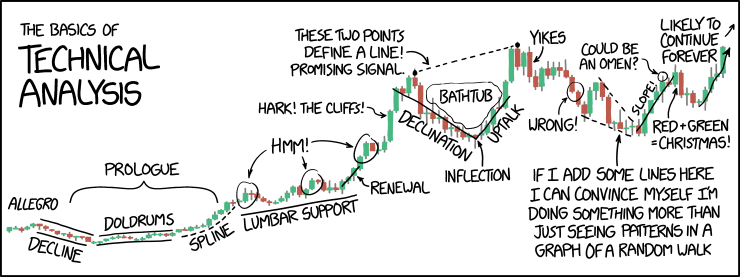
Dave’s guide to visualisation
This ‘guide’ is a compendium of materials and ideas accumulated and developed over 25 years of teaching and academic research as geoinformation scientist with a penchant for visualisation. It is what I have ‘picked up along the way’ rather than being comprehensive, but I hope it will stimulate thought. Some references are provided. One final thing, I’m dyslexic so please excuse any spelling or grammatical errors, or better, send me a corrected version with a link to the page it came from.
- Conceptual models of data visualisation
- Design principles and decisions
- High-level design principles
- Low-level design principles
Conceptual model of data visualisation >>>
References
Wolff, A., Gooch, D., Montaner, J. J. C., Rashid, U., & Kortuem, G. (2016). Creating an understanding of data literacy for a data-driven society. The Journal of Community Informatics, 12(3), 9–26. https://doi.org/10.15353/joci.v12i3.3275